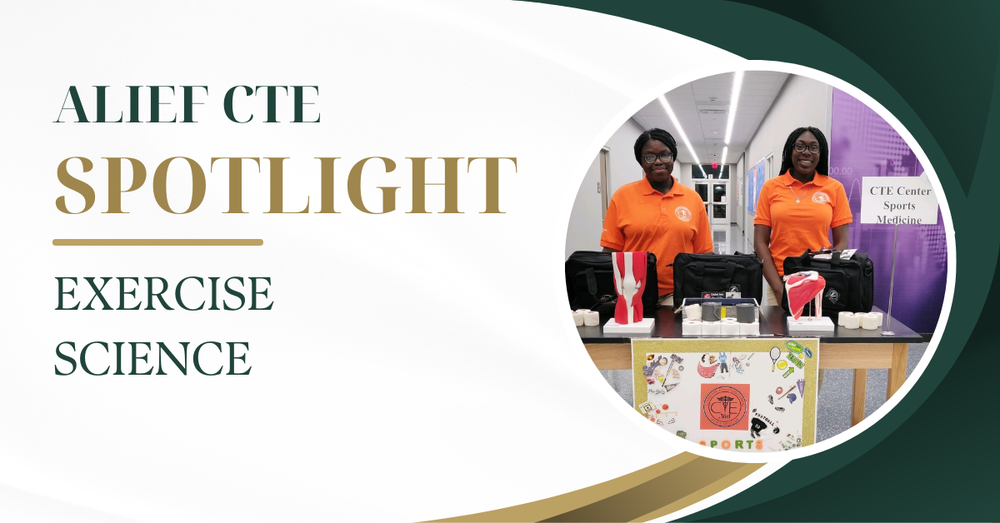
The Exercise Science pathway offers students a dynamic and career-focused opportunity to explore the science of human performance, health, and fitness within the broader Career and Technical Education (CTE) framework. Housed under the Health Science cluster, the program is designed to give students both foundational knowledge and real-world skills that prepare them for college and careers in kinesiology, sports medicine, and related fields.
Students begin their journey with Kinesiology I and Kinesiology II, followed by Practicum in Sports Management. Before enrolling in Kinesiology courses, students must successfully complete Principles of Health Science and Medical Terminology. To advance into the practicum experience, they must complete both Kinesiology I and II. While not required, Anatomy and Physiology is strongly encouraged to provide students with a deeper understanding of the human body and its systems, further strengthening their academic preparation.
Throughout the pathway, students explore a wide range of topics within exercise science, including nutrition, rehabilitation, injury care and prevention, and the science behind effective training and conditioning. The curriculum goes beyond theory, introducing students to biomechanics and the principles that guide safe and effective physical activity. By the time they complete the program, students are equipped to assess client needs and design fitness plans grounded in evidence-based practices.
A defining feature of the Exercise Science program is its emphasis on hands-on learning. Through partnerships with the NGC campuses and Kerr Physical Education programs, students apply classroom knowledge in practical settings. They collaborate with “clients” and coaches to design personalized workout programs aligned with specific goals. Students conduct drills, assess performance, and work alongside PE coaches to refine their coaching abilities. These experiences not only strengthen technical knowledge but also cultivate soft skills such as communication, teamwork, leadership, and adaptability.
In the past, the program partnered with the Alief YMCA to expose students to the administrative and operational aspects of running a gym. While that partnership concluded when the facility closed, the program is actively seeking new collaborations with local gyms to continue offering students insight into the business side of fitness management. Established relationships with Fitness Connection and 24-Hour Fitness allow students to tour facilities and learn directly from personal training staff. Additionally, students may work with campus athletic trainers to observe and learn injury prevention and rehabilitation practices in action, further expanding their real-world exposure.
One of the most significant benefits of the pathway is the opportunity for successful students to earn a Certified Personal Training Certification. This industry-recognized credential enables graduates to work as personal trainers in commercial gyms or even pursue entrepreneurship by launching their own training businesses. This certification provides immediate workforce value while also laying a strong foundation for continued study in college-level kinesiology and sports medicine programs.
The program currently serves 34 students in Kinesiology, with a capacity of 40, and 19 students in Practicum in Sports Management, with a cap of 20. These smaller class sizes allow for individualized support and meaningful engagement in hands-on activities.
To ensure that all interested students have access to the pathway, the program is not list-driven; students who express interest are placed into Kinesiology after completing Medical Terminology. Equity is a central priority. Instruction is designed to accommodate diverse learning styles—auditory, visual, and kinesthetic. The online curriculum includes accessibility features such as text-to-speech and built-in vocabulary definitions to support comprehension. Lessons are reinforced through lab activities, video demonstrations, peer-to-peer collaboration, and hands-on skill practice. Students are intentionally paired with partners to foster collaborative learning and confidence-building. In addition, instructors work closely with PE coaches to place students in environments where they can grow as practitioners and strengthen their self-assurance.
Families and students are supported through informational videos detailing the program and parent meetings for those entering the practicum course. These resources help ensure transparency and clarity about expectations, outcomes, and opportunities within the pathway.
Beyond individual student growth, the Exercise Science program is designed to meet evolving workforce demands. As businesses and corporations increasingly prioritize corporate wellness initiatives, the need for knowledgeable fitness and sports medicine professionals continues to grow. Companies recognize that healthier employees contribute to lower healthcare costs, reduced absenteeism, and higher productivity. Some organizations are even incorporating sports medicine professionals into industrial settings to reduce workplace injuries and lost time. By training students in injury prevention, fitness assessment, and program design, the Exercise Science pathway prepares them to contribute meaningfully to these expanding sectors.
Ultimately, the program aims to graduate students who possess critical thinking skills, strong communication abilities, and the confidence to advocate for healthier lifestyles—both for themselves and for others. With a blend of academic rigor, practical experience, and industry certification, the Exercise Science pathway empowers students to pursue higher education and enter a workforce increasingly focused on health, wellness, and performance.